ADHD Medication Pros and Cons: A Parent’s Guide to Making an Informed Choice (Part 2 of 3)
Deciding whether to start your child on ADHD medication is a challenging choice. While these prescriptions are often considered the frontline treatment for ADHD in children, it’s completely natural to feel hesitant or overwhelmed by the decision to start ADHD medication. In this post, we’ll explore the pros, cons, and clinical nuances of ADHD medications to help you make the best, most informed decision for your family.
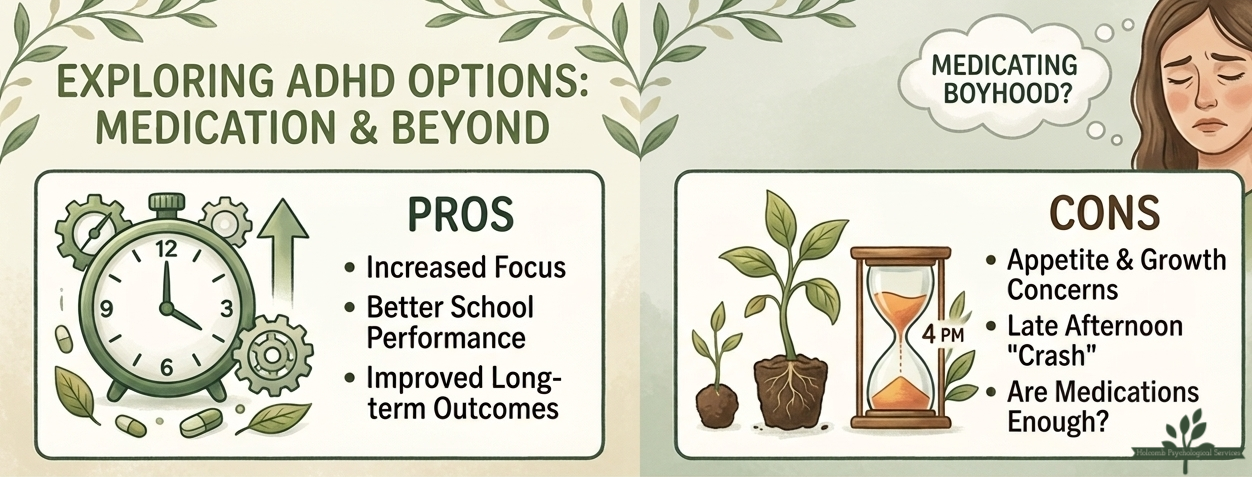
An infographic depicting the pros/ cons of ADHD medication.
Do ADHD Medications Work? Understanding the Benefits
First and foremost, it is important to note that stimulant medications for ADHD are highly effective. Clinical research shows that they significantly improve a child's focus, attention, and school performance.
Beyond the classroom, effective management of ADHD symptoms has been shown to reduce long-term risks associated with the disorder, including improvements for mood and behavioral outcomes.
Improvements to focus
Improvements to attention
Improvements to school performance
Decreased likelihood of severe depression
Reduced rates of serious traffic accidents in later years
Lower risks of criminal involvement
Decreased suicide rates
Many educators and doctors advocate strongly for these treatments because they can provide rapid, noticeable relief for a disorder that is otherwise incredibly complex and difficult to manage. For many families, this quick benefit offers a vital lifeline.
The Known Cons: Exploring the Side Effects and Challenges
While ADHD medications are effective, they do come with distinct downsides that parents should look out for.
1. Appetite Suppression and Growth Concerns
Stimulants act as appetite suppressants, meaning your child is likely to eat less. If your child is already naturally small, this can become a concern. Additionally, I’ve seen many pubescent boys on stimulant medications who find themselves to be the smallest kid in the class, something that does not help their self-esteem
To balance this effect, pediatricians and psychiatrists frequently recommend "medication holidays," where children step back from their medication on weekends or during school breaks to allow their appetite and growth to catch up.
2. The "4 PM Crash"
Stimulant medications generally don't stay in the body for very long. On the positive side, this means you can theoretically skip a day without any withdrawal consequences.
However, the downside is the daily comedown. As the medication wears off in the late afternoon, kids often unleash their pent-up, wild energy. This timing coincides with the dreaded parenting slog that is 4pm to bedtime. So while teachers notice a difference in school, many parents don’t see the same benefits at home.
3. Societal Pressures and "Medicating Boyhood"
There is a valid, ongoing conversation regarding whether we are inadvertently "medicating boyhood." Because the vast majority of elementary school educators are women, and young boys are often naturally less orderly, neat, or polite than young girls, traditional classroom settings can be a tough fit. Whether this gap is biological or societal, we must consider if we are sometimes using medication simply to force a square peg into a round hole. (For more on this, check out my previous blog post on shifting to a strengths-based perspective!)
Methodological Issues in ADHD Research
When weighing your options, it is also helpful to understand the limitations of current scientific data. Many Randomized Controlled Trials (RCTs) examining the effectiveness of ADHD medications use highly selective criteria. They often only admit children who have isolated ADHD, completely excluding children who have co-occurring conditions like anxiety, depression, or learning disabilities. Because real-world ADHD is rarely so simple, these clinical studies don't always perfectly reflect the day-to-day reality of your unique child.
Additionally, we still have a number of questions about ADHD medication. For example, is it best for a child to begin medication early or wait until puberty? What happens when a child is on ADHD medications daily for a prolonged period? How do stimulant medications interact with other disorders, such as seizure disorders or bipolar disorder? We have a lot of questions and the research may not have all our answers.
Finding the Right Balance: A Therapist’s Perspective on Child ADHD Interventions
As a clinical psychologist, I’ve navigated the complexities of ADHD with many families and individuals. I have seen psychiatric medications work absolute wonders, and I’ve also seen them cause a frustrating host of side effects or completely fall flat.
Every child's neurological profile is unique. If your child has an underlying medical condition, such as a seizure disorder, or struggles with being underweight, it is absolutely essential to have an open, transparent conversation with your pediatrician about your concerns before introducing any new prescription.
The Trial-and-Error Reality of ADHD Management
Ultimately, you won’t know what interventions work for your child until you try them. Whether that’s medications or some of the additional interventions I’ll suggest next week (or both), finding the right fit requires an intentional test run. With the guidance of your healthcare provider, you can start your child on a trial period for a stimulant medication, track the behavioral shifts closely for a set timeframe, and then collectively determine the best next steps.
Moving Beyond Medication: A Holistic Approach to ADHD Support
While medication can be an incredibly powerful tool in your toolkit, it is rarely a standalone fix for managing ADHD in kids. Lasting progress usually happens when we look at the bigger picture. To truly help your child thrive, it is important to pair medical interventions with:
School Accommodations: Customizing classroom environments (like a 504 plan or IEP) to support focus and reduce overwhelm.
Executive Functioning Tools: Using visual schedules, timers, and organization strategies to build independent life skills.
Lifestyle Shifts: Optimizing sleep hygiene, nutrition, and physical outlets to support natural regulation. (Stay tuned for next week’s blog for more on these shifts!)
If it were my own child? As long as it is clinically safe and recommended by a trusted pediatrician, I wouldn't rely on just one strategy. I would embrace a comprehensive, wrap-around approach and see what truly sticks for their unique mind.
Next Week: Beyond the Pill – Actionable ADHD Tools for Home & School
Medication is just one piece of the puzzle. Next week, we’re diving into the exact executive functioning tools, behavioral strategies, and lifestyle shifts that help kids thrive—with or without a prescription. Be sure to follow our page on social media so you never miss a resource!
Looking for specialized support navigating your child's ADHD journey?
As a licensed therapist, I partner closely with parents to develop tailored parenting techniques, school accommodation strategies, and collaborative care plans that reinforce your child's well-being. Whether you are looking for local support in Clovis, California, or convenient online therapy across the state, I am here to help your family find what works. Schedule a complimentary consultation today to learn more about my telehealth services.
References:
Chang, Z., Ghirardi, L., Quinn, P. D., Asherson, P., D’Onofrio, B. M., & Larsson, H. (2019). Risks and Benefits of Attention-Deficit/Hyperactivity Disorder Medication on Behavioral and Neuropsychiatric Outcomes: A Qualitative Review of Pharmacoepidemiology Studies Using Linked Prescription Databases. Biological Psychiatry, 86(5), 335–343. https://doi.org/10.1016/j.biopsych.2019.04.009
